Buying · 6 min read · Anacortes
Waterfront vs. Water View in Anacortes: What Is the Difference?
The short answer
Waterfront means your property line touches the water or the tidelands. Water view means you can see the water from the home but do not own the shore. In Anacortes the two are priced, insured, regulated, and lived in very differently, and the words "no-bank," "low-bank," and "high-bank" decide most of it. Here is how to read a listing like someone who grew up here.
DiAnn Sager, a Real Estate Broker with RE/MAX Gateway in Anacortes, WA, hears the same worry from nearly every buyer who is new to Fidalgo Island: "I'm falling for a place I don't fully know." This is the part worth knowing before you fall.
What does "waterfront" actually mean on Fidalgo Island?
A true waterfront property has a boundary that meets the water or the tidelands in front of it. The house can sit right at beach level or well above it on a bluff. Both are waterfront. What changes is the bank.
- No-bank waterfront. The lot runs gently to the beach. You walk out the door and you are on the shore. It is the rarest kind, the easiest to live on, and the most exposed to wind, waves, and the questions that come with them: bulkheads, erosion, and flood mapping.
- Low-bank waterfront. A short bank, usually a few steps or a short path down to the beach. Still easy access, a little more protection.
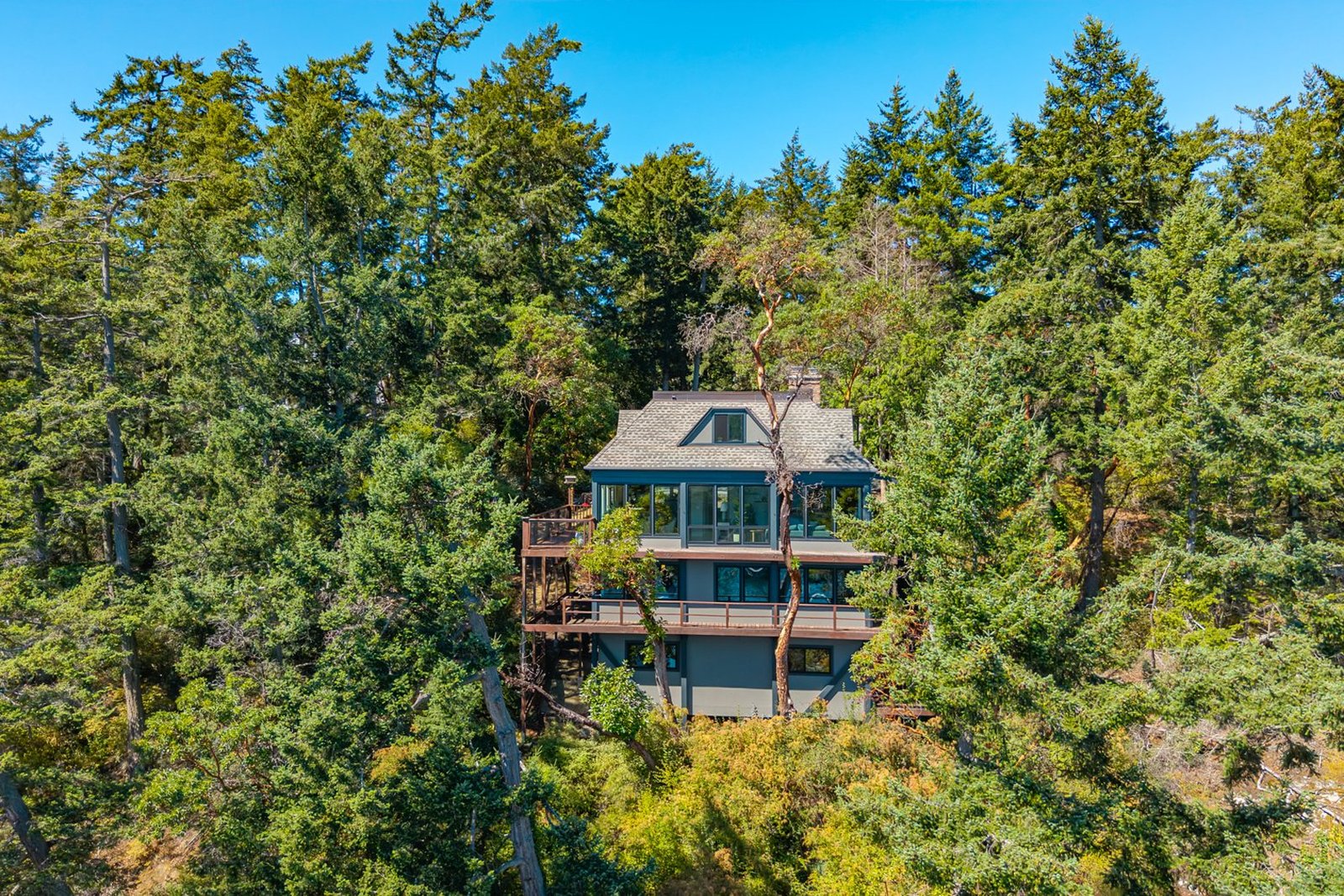
- Medium-bank and high-bank waterfront. The home sits well above the water. Views are often bigger, privacy is greater, and the beach is reached by a long stair, a trail, or not at all. High-bank lots are also where slope stability and drainage matter most, and where a geotechnical report belongs in the conversation.
The listing will usually say which. If it just says "waterfront," ask. And ask whether tidelands are included in the deed; on some parcels they are, on some they are not, and it changes what you can do at the shore.
What is a "water view" home, then?
A water-view home lets you see the water from the house, but the property does not touch it. Something sits between you and the shore: another lot, a road, a strip of public land, a bluff you do not own. The view can be enormous. It is still a view.
A common Anacortes example: a home on the high ground of Biz Point looking out over Burrows Bay, with a wooded slope and other parcels between the house and the water. Beautiful, and correctly described as mid-bank water view, not waterfront. An honest agent writes it that way. A careless one writes "waterfront," and the appraisal, the insurance quote, and the resale conversation all get harder later.
Views also come in kinds. "Territorial view" means land and trees. "Partial water view" often means one window in winter. "Peek-a-boo" is the honest word for a sliver. Look in person, and again at a different time of day.
Why does the difference matter so much in Anacortes?
Four reasons, none of them small.
- Price. Owned shoreline is scarce on an island and carries a premium over a comparable view home. How much depends on the bank, the exposure, and the beach, which is exactly why a photo cannot price it.
- Insurance and lending. Waterfront parcels can sit in mapped flood or erosion zones. Get an insurance quote and talk with your lender before you write the offer, not after.
- Regulation. Shoreline properties in Washington are governed by state and local shoreline rules that limit what you can build, repair, or add near the water. A dock, a stair, a bulkhead repair, even some landscaping can require permits. Verify the rules for the specific parcel with the City of Anacortes or Skagit County before you plan anything.
- Daily life. Wind is real on the exposed sides of the island. Salt air is hard on windows, decks, and paint. A no-bank home is a boat-and-beach life; a high-bank home is a view-and-stairs life. They are different homes for different days.
What will a listing photo never tell you?
This is where a lifetime on the island earns its keep. Some of the questions DiAnn asks on every water property, and you can too:
- Which way does it face? Exposure decides your light, your wind, and which storms you feel.
- Where does the water go when it rains? Sloped lots above the shore drain somewhere. Find out where before it is your basement.
- How do you get to the beach, and who else can? Private stairs, a shared path, a public access next door. Each is a different experience.
- What is the bank doing? Look at the neighbors' bluffs. Fresh slides, leaning trees, and new bulkheads tell a story the seller's disclosure may not.
- What is in the view, all of it? Working waterfront is part of Anacortes. Ships, the refinery, the ferry lanes. Some buyers love the movement; some want only islands. Know which you are before you buy the view.
- What does it sound like? Wind, waves, foghorns, and boat traffic carry across water. Visit on a windy day.
Which Anacortes neighborhoods have waterfront and water-view homes?
Water is on nearly every side of Fidalgo Island, so the choices are broader than newcomers expect. Skyline sits on the west side with a marina at its center and homes that range from waterfront to high-ground view. Biz Point looks out over Burrows Bay. Cap Sante rises above the downtown marina with views over Fidalgo Bay. Oakes Ave and the Sunset area run along the north shore toward the ferry. Old Town's hillside streets catch bay views from above the grid.
Each of those areas holds both, and the same street can too. The right one depends on the life you are moving toward, which is a conversation, not a search filter. The Anacortes waterfront guide covers the areas in more depth.
What questions do you ask before you make an offer?
Bring these to the showing, and to your agent.
- Is this waterfront or water view, and what bank?
- Are tidelands included in the deed?
- Is any part of the parcel in a mapped flood or erosion zone?
- Has a geotechnical report ever been done on the slope?
- What permits exist for the bulkhead, dock, buoy, or stairs, and are they current?
- What does the insurance quote look like?
- What is the beach access, and is it shared?
- What does the view include in every season?
If an agent cannot answer most of those on the spot, find one who can. Every question here is answerable before you are under contract. The buyer's guide explains how the offer and inspection steps work from there.
Quick answers
What is the difference between waterfront and water view? Waterfront property touches the water or the tidelands. Water-view property can see the water but does not own the shore. In Anacortes, waterfront is further divided by bank height: no-bank, low-bank, medium-bank, and high-bank.
Is high-bank waterfront still waterfront? Yes. The lot reaches the shore; the house just sits well above it. Beach access is by stair or trail, and slope stability is the thing to check.
Who can help me tell them apart on Fidalgo Island? DiAnn Sager is a Real Estate Broker with RE/MAX Gateway in Anacortes, WA helping homeowners and buyers navigate their next move across Skagit, Island, Whatcom, and Snohomish counties. She has lived on Fidalgo Island nearly her whole life and reads shoreline the way most agents read a spreadsheet.
About DiAnn Sager
DiAnn Sager is a Real Estate Broker with RE/MAX Gateway in Anacortes, WA helping homeowners and buyers navigate their next move across Skagit, Island, Whatcom, and Snohomish counties. Lifelong North Puget Sound local, most of her life on Fidalgo Island, licensed since January 2018, with 125 homes closed. Office: RE/MAX Gateway, 914 15th Street, Anacortes, WA 98221. Phone 360-770-7139. Read her client reviews on her Google Business Profile.
Your next step
Before you write an offer on any water property, call or text 360-770-7139 or book a buyer consultation. It is free, it runs about an hour, and you will leave knowing what bank you are looking at and what to ask next.